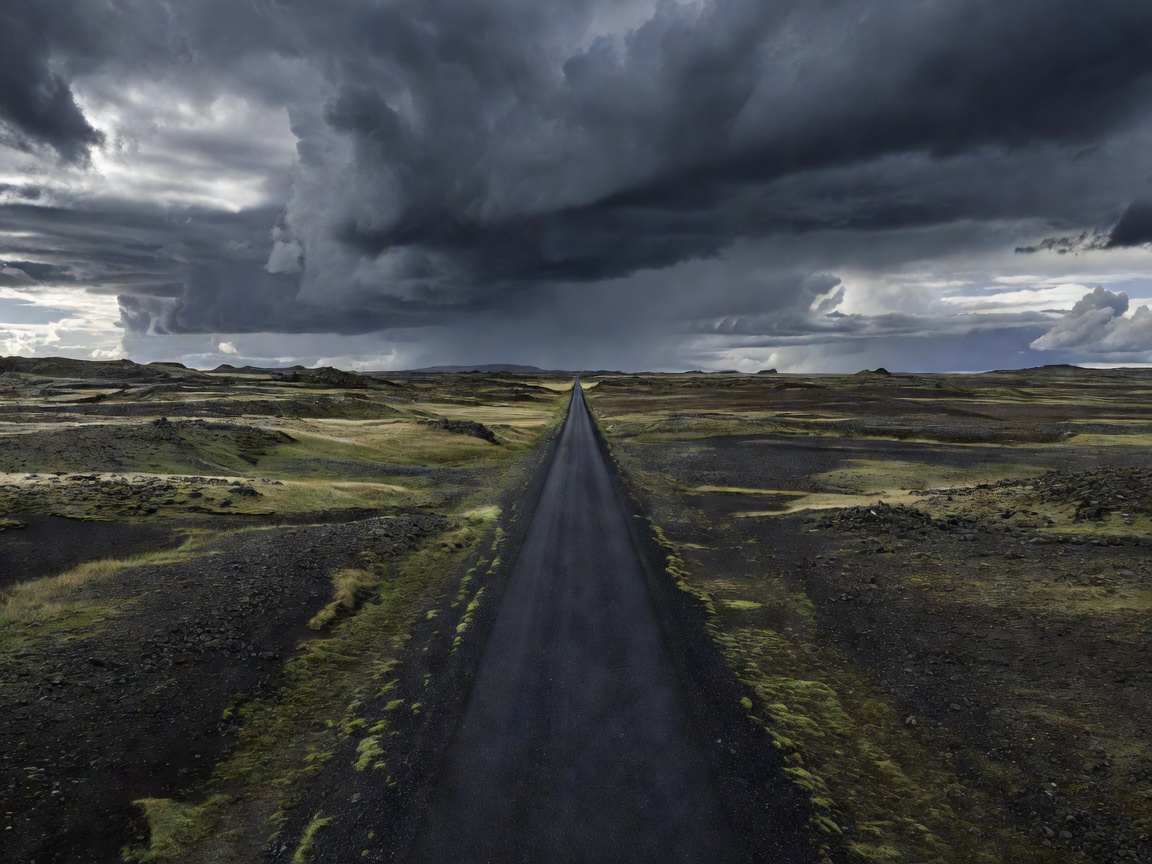
The Route Overview
Route 1, more commonly referred to as the Ring Road, is the main artery of Iceland. It circles the entire island, connecting the major towns and providing access to the uninhabited, otherworldly landscapes that define the nation. Spanning roughly 828 miles, it is mostly a paved, two-lane road, though its simplicity is deceptive. The geography it traverses shifts violently from lush, green agricultural valleys to stark, black basalt deserts and glacial floodplains.
The drive demands respect. Unlike continental road trips where towns merge into one another, Icelandic driving is defined by isolation. You can drive for hours through the eastern fjords or the northern highlands without seeing a petrol station or another vehicle. This solitude amplifies the scale of the landscape, making the Ring Road one of the most introspective driving experiences on the planet.
Vehicle Specifications & Recommendations
The choice of vehicle in Iceland dictates entirely where you can go. While Route 1 itself is largely paved and accessible by standard two-wheel-drive (2WD) vehicles during the summer months, a 4x4 is highly recommended for any serious itinerary. Without a 4x4, you are legally prohibited from entering the "F-roads"—the rugged, unpaved mountain tracks that lead to the island's most spectacular interior landmarks.
If you commit to a 4x4, ensure it has adequate ground clearance. River crossings are common off the main highway, and standard rental SUVs often lack the necessary height. High-quality tires, functional heating systems, and a physical spare tire (not a repair kit) are non-negotiable. Furthermore, due to the high winds common across the island, doors must be held firmly when opening, as wind damage to hinges is the most frequent insurance claim filed by rental agencies in Iceland.
Pros and Cons of the Drive
The Benefits
- Unrivaled access to volcanic craters, glacial lagoons, and immense waterfalls directly off the highway.
- Minimal traffic outside of the southwest quadrant, allowing for uninterrupted cruising.
- The road is an entire loop, meaning no backtracking is required to complete the journey.
The Drawbacks
- Extreme and unpredictable weather that can close sections of the road for days, even in summer.
- High costs for fuel, food, and accommodation along the remote stretches of the route.
- Single-lane bridges are frequent and require careful etiquette and awareness to cross safely.
Key Viewpoints and Essential Stops
The southern stretch of Route 1 is the most densely packed with landmarks. Seljalandsfoss, a towering waterfall you can walk entirely behind, and Skógafoss, known for its sheer power, are essential early stops. Continuing east, the landscape opens up into the massive Skeiðarársandur glacial outwash plain, a flat, black expanse that feels entirely extraterrestrial.
Further along sits Jökulsárlón, the famed glacier lagoon. Here, immense blue icebergs calve off the Breiðamerkurjökull glacier and float silently toward the ocean, eventually washing up on the adjacent "Diamond Beach." In the north, the Mývatn region offers a striking contrast of bubbling mud pools, steaming fumaroles, and jagged lava formations. It is a stark reminder of the massive geothermal forces churning just beneath the tarmac.
Seasonal Planning
Attempting the Ring Road is heavily contingent on the season. Summer (June through August) offers the midnight sun—nearly 24 hours of daylight—which allows for flexible driving schedules and avoids the stress of navigating unfamiliar mountain passes in the dark. The roads are entirely clear of snow, and all secondary access routes are open. However, this is peak tourist season; prices are at their highest, and popular sites will be crowded.
Winter (November through March) transforms Route 1 into an entirely different, highly dangerous expedition. While the road is technically kept open, blizzard conditions, white-outs, and black ice are constant threats. Driving the Ring Road in winter should only be attempted by those with extensive experience in extreme snow conditions, utilizing studded tires. The reward for this risk is a landscape blanketed in pristine white, the complete absence of crowds, and the high probability of witnessing the Aurora Borealis from the driver's seat.