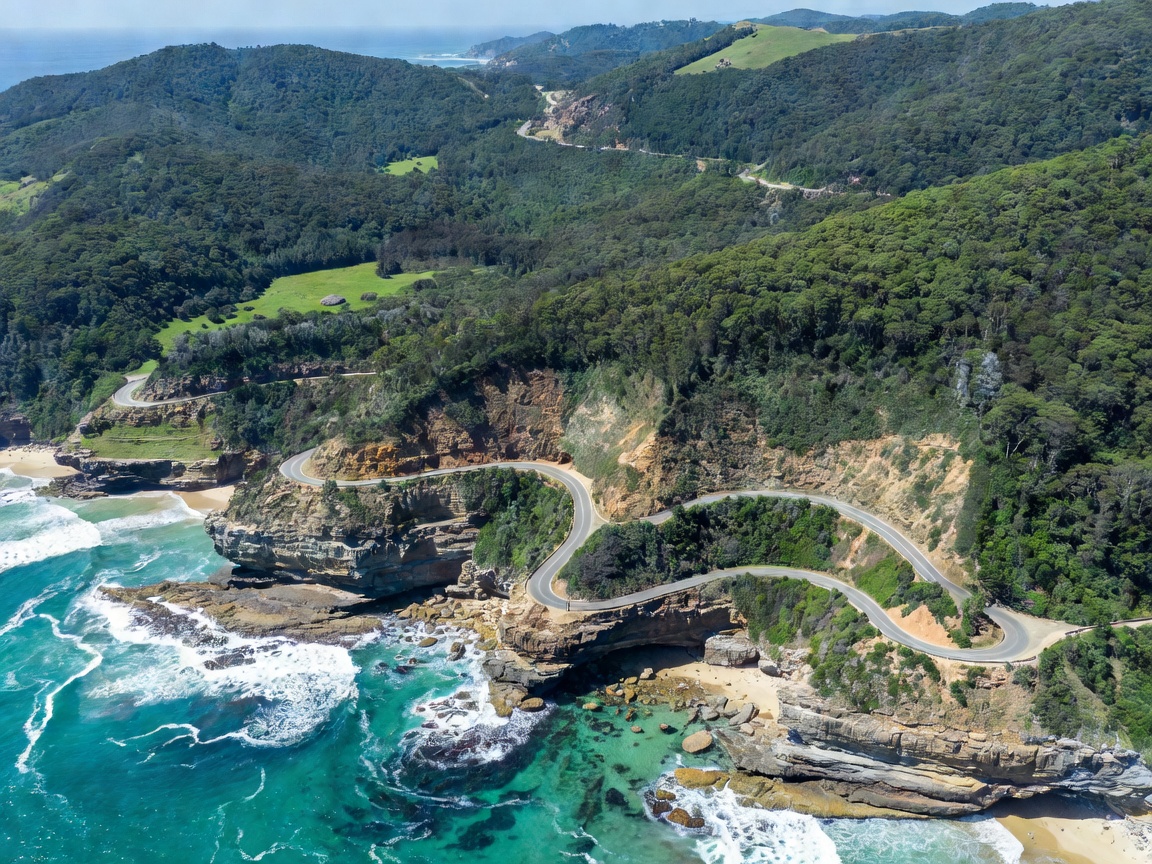
The Route Overview
Spanning 150 miles between the Victorian towns of Torquay and Allansford, the Great Ocean Road is fundamentally different from other coastal drives due to its origins. Constructed by returning soldiers between 1919 and 1932, it stands as the world's largest war memorial. Driving it is an act of historical appreciation as much as it is a visual delight. The road seamlessly transitions from surf-pounded beaches to dense, towering eucalyptus forests, offering a masterclass in the biodiversity of southern Australia.
The journey traditionally begins in Torquay, the spiritual home of Australian surfing, and immediately hugs the shoreline hugging the Bass Strait. As the route pushes westward, the cliffs grow taller and more imposing. The road surface itself is well-maintained but highly technical, featuring sudden camber changes, blind crests, and tight radii that demand continuous driver engagement.
Vehicle Specifications & Recommendations
Unlike rugged outback routes, the Great Ocean Road does not necessitate a four-wheel-drive vehicle. The entire length of the B100 highway is sealed tarmac. The ideal vehicle here is a nimble, mid-sized estate or a premium hatchback. Agility is favored over sheer size; many of the coastal sections feature narrow lanes and very tight turning circles where large SUVs can feel remarkably cumbersome.
Braking performance is critical. You will frequently encounter sudden drops in speed limits as the road winds through small seaside towns like Lorne and Apollo Bay. Furthermore, local wildlife—specifically kangaroos and koalas—are known to cross the road, particularly at dawn and dusk. Excellent headlights and responsive brakes are your best defense against unexpected obstacles.
Pros and Cons of the Drive
The Benefits
- Incredible geographical diversity, moving from surf beaches to temperate rainforests in a matter of miles.
- World-renowned limestone formations that provide dramatic, large-scale photographic opportunities.
- A high concentration of excellent local hospitality, seafood, and accommodations in towns along the route.
The Drawbacks
- Heavy congestion caused by tour buses, which frequently travel significantly below the speed limit on winding sections.
- Highly variable weather; the Southern Ocean can bring rapid drops in temperature and heavy rain squalls without warning.
- Strict enforcement of speed limits with hidden cameras throughout the region.
Key Viewpoints and Essential Stops
The undisputed climax of the Great Ocean Road lies in the Port Campbell National Park. Here, the limestone stacks known as the Twelve Apostles rise dramatically from the violent surf of the Southern Ocean. While they are the most famous attraction, they are best viewed at sunrise to avoid the midday crush of coach tours. Just a short drive further lies the Loch Ard Gorge, a breathtaking inlet with a tragic maritime history of shipwrecks, offering a more intimate interaction with the sheer cliffs.
Beyond the coastline, a detour into the Great Otway National Park is mandatory. The road here veers inland, plunging into a dense canopy of ancient myrtle beech trees and towering mountain ash. The temperature drops noticeably, and the air smells of damp earth and eucalyptus. This section provides a sharp, refreshing contrast to the exposed, sun-drenched coastal stretches.
Seasonal Planning
Australia’s seasons are reversed from the Northern Hemisphere, meaning peak summer falls between December and February. While this offers the warmest beach weather, it also aligns with domestic school holidays. The road becomes heavily congested, and accommodation prices surge. Summer also brings the highest risk of bushfires, which can result in sudden road closures and dangerous driving conditions.
The optimal time to undertake the Great Ocean Road is during the Australian autumn (March to May) or spring (September to November). During these months, the weather remains temperate enough for comfortable exploration, but the volume of tour buses decreases significantly. Winter (June to August) presents a distinctly different aesthetic; the Southern Ocean becomes wildly aggressive, lashing the limestone cliffs. It is dramatic and beautiful, but requires cautious driving due to wet, slippery roads and persistent sea mist.